
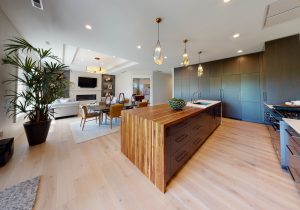
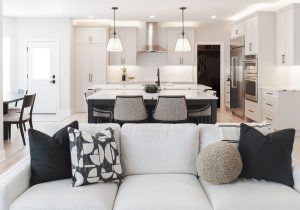
Open concept kitchens remove barriers between kitchen and living spaces to improve flow, light, and social interaction. Successful designs require structural planning, storage compensation, and cohesive finishes.
What Defines an Open Concept Kitchen
A layout that removes non-structural walls to connect kitchen, dining, and living areas.
Benefits of Open Concept Design
- Improved natural light
- Better social interaction
- Increased perceived space
- Modern home appeal
Structural Considerations
- Load-bearing wall evaluation
- Beam installation requirements
- HVAC and electrical rerouting
Design Challenges
- Reduced wall storage
- Noise transfer
- Visual clutter exposure
How to Maintain Storage in Open Layouts
- Large kitchen islands
- Floor-to-ceiling pantry cabinets
- Hidden appliance storage
Role of Cornerstone Cabinets in Open Layouts
- Island-centric storage systems
- Custom pantry integration
- Seamless design continuity
FAQ:
Can all kitchen walls be removed?
No, load-bearing walls require structural reinforcement.
Do open kitchens add value?
Yes, in most modern home markets.
How do you maintain storage in open kitchens?
Through custom cabinetry and strategic island design.
Myth vs Fact
Myth: Open kitchens always reduce storage.
Fact: Custom cabinetry can maintain or increase storage capacity.
Common Mistakes to Avoid
- Under sizing beams or skipping engineering sign-off.
- Removing walls without replacing their storage function.
- Forgetting electrical outlets on islands and along seating overhangs.
- Inconsistent finishes between connected rooms that break visual flow. Click here to learn more about remodeling regrets from Home Beautiful.
Timeline Guide
- Design and engineering: plan approvals and structural calcs.
- Ordering: cabinetry and long-lead fixtures.
- Demo and structure: wall removal, beam/post installation.
- Rough-ins: HVAC, plumbing, electrical.
- Finishes and install: flooring infill, paint, cabinets, countertops, lighting.
Next Step: Design Consultation
Remodeling Contractors of Des Moines and Cornerstone Cabinets can engineer beams, design island-centric storage, and specify cohesive finishes that keep your open concept kitchen functional, quiet, and visually unified.
Quick Planning Checklist
- Confirm which walls are load-bearing and size beams accordingly.
- Map HVAC, plumbing, and electrical reroutes before demolition.
- Define work zones (prep, cook, clean) to prevent oversize, inefficient spans.
- Allocate storage lost from removed walls to island and pantry solutions.
- Choose a cohesive finish palette across kitchen, dining, and living areas.